I just finally finished watching all 98 episodes of Star Trek: Enterprise from beginning to end. It’s taken me a couple of months, but I wanted to have all the background information I would need for my Star Trek Adventures roleplaying campaign, which takes place between the end of the Original Series and the beginning of Star Trek: The Motion Picture. I started by watching the Original Series, then the animated series, and then Enterprise. My mission is finally over.
Now, don’t come at me with Discovery and Strange New Worlds. Those shows are fine, but let’s be honest. They’re reboots. Re-imaginations. Whatever you want to call them. They cannot possibly be canonical for the continuity in which Star Trek The Original Series exists. As far as I’m concerned, they’re another timeline like the Kelvin timeline from the movies and I’m okay with that. I wouldn’t even mind if they redid the Original Series episodes in their own style. Anyway, back to Enterprise.
The first two seasons, I thought, started out pretty strong. They went out there and explored. The humans had a sense of wonder that even their Vulcan science officer found attractive. T’Pol would be on the bridge explaining that a phenomenon had already been catalogued by Vulcan scientists who found it unremarkable, and the Enterprise crew would discover something new and amazing about it because they weren’t jaded. Occasionally, these closer examinations would reveal a mystery that had to be solved. Really good Star Trek, if you ask me. Technology developed, strategies and tactics evolved, and it felt pretty natural.
Where it got completely cringey, however, was in their exploitation of the actors’ bodies. The lame decontamination gel scenes simply weren’t necessary, with them rubbing decon gel over each other’s hard-to-reach spots while in their underwear. T’Pol’s skin tight outfits and revealing satin night garments, which we saw often, were, if you’ll excuse the expression, illogical. Was there precedent for this, with Deanna Troi and Seven of Nine on their respective shows? Of course. But it didn’t make it right.
At the end of season two, however, the Enterprise went completely off the rails. Clearly inspired by the events of 9/11, a new race called the Xindi attacked Earth with a weapon of mass destruction that killed seven million people in Florida, including Trip Tucker’s sister. They spent the entire next season seeking revenge and looking for a new weapon that the Xindi were going to use to annihilate Earth. Gone was the entire premise of Starfleet as explorers, and we watched Captain Archer become a ruthless commander, crossing many moral lines that he never would have in the first two seasons. I still remember when I stopped watching the show when it first aired, after the 19th episode of the season (“Damage”), when Archer ordered his crew to steal the warp coil from the Illyrians, stranding them three years from their home. I remember just thinking, who are these awful people? So, this time around, I finished the season, and was gratified to see them dealing with the aftermath of these decisions in season four, after a bizarre time-traveling World War II two-parter. I half expected Archer to wake up in the German camp, saying, “Oh boy.”
The fourth and final season, though, I have to say, was a slog. Even if the third season was filled with horrible behavior, at least they had a clear mission to accomplish. The fourth season felt like they were using leftover scripts from Star Trek The Next Generation. Enterprise was no longer exploring. They were ferrying people around, policing augments, the result of genetic engineering, running supposed transporter experiments, and just hanging around known space. It really wasn’t much Star Trek at all. It was totally TNG, which I suppose made that awful finale appropriate, with guest stars from that show.
I would have liked to have seen what they had in mind for a season five, but given the decline in quality of stories in season four, it seems like they were just running out of antimatter there at the end.
My official retirement from full-time teaching was January 1, 2020, so I’ve been collecting my pension for three years now. Today, I received my 36th pension payment. What does that mean? Well, I’m not living high off the hog or anything like that, but it means I make a free mortgage payment and pay the cable bill every month with a couple hundred bucks left over, which I generally use to buy comic books, or to pay for a roleplaying game environment or ship design. But since I regained the ability to do so after COVID subsided enough to let kids to school again, I’ve been more or less working full-time. I started out substitute teaching every day, then I went back to the classroom full-time for a year. Now I’m back to substitute teaching every day. I know; I apparently don’t know how retirement works, which leads us to Pension Day.
I decided yesterday that I was going to take off the first of each month, starting today. While I waited for my pension check to be directly deposited, I got up and did my usual routine: coffee, meds, Wordle, Quordle, and Octordle. Then I took a shower and got dressed. By that time, my check was in, so I paid my two bills out of it, and planned my day. My birthday is coming up on Monday, and my drivers license is about to expire. So, I dug out the documents I needed to get a Real ID. I thought getting a professional haircut might be nice for the first time since 2019 because I was going to have my photo taken, so I headed down the road. I stopped at the bank, withdrew my bonus money, and there was a line of four people waiting at Great Clips. I know, it’s a cheap haircut, but I have been cutting my own with a #2 guard and clippers for several years. It’s not that hard to do. I decided not to wait, and went to get lunch first.
I drove into Mishawaka and stopped at Doc Pierce’s for lunch. Doc Pierce’s is a throwback restaurant that was built in 1976 and I don’t think it’s ever been updated. It is definitely for old people, which make up the primary clientele, so it’s perfect for Pension Day.
Doc Pierce’sNo, this was not taken in the 1970s. It was taken three weeks ago!
The tables and chairs are made of real wood, not particle or composites. The stained glass light fixtures give it a homey feeling. And the music they play is MY music. My wife Magi and I ate there a couple of times last summer, and had a great time just figuring out what year each song came out. We had our Shazam app to back us up, but we were right 90% of the time.
Everything there is pretty good. It’s a nice local place with decent food. Another tip-off that the clientele ages a little high is that you have to request that your food be seasoned. I found out the hard way this past summer when I got an unseasoned steak! It was cooked beautifully, but was very bland. I didn’t make that mistake today, and had a nice 12-oz. ribeye with a baked potato and sauteed mushrooms. It was delicious.
As I sat there in the one-person booth, I thought to myself, if I’m going to treat myself to a nice lunch, why not get a good haircut? So, after lunch, I headed over to SportsClips.
I hadn’t been to Sportsclips in forever, especially since I had been cutting my own hair and it was well out of the way. But I remembered their VIP service, which includes a shampoo and head and neck massage, as well as a hot towel. I do not regret that decision one bit. I had a wonderfully relaxing time, and my hair hasn’t been this even in years. I even got the full beard trim, eyebrow trim, and everything. This just might have to become a regular Pension Day experience as well.
I stopped by Barnes & Noble just for fun, and reminisced about doing book signings there. It was a happy memory, not at all tinged with grief, so I count that as a good thing. Then I went to the BMV. To my utter shock, my number was called before I could even sit down. I was in and out of there in 15 minutes. Incredible.
On the way home, I stopped at Wendy’s for one final indulgence. Wendy’s currently has peppermint Frostys, so I got one with half chocolate and half peppermint. Delicious!
I’ll be back at work tomorrow, but I think I definitely want to start reserving the first of the month for a fun day to remind myself that I am retired!
It seems unbelievable to me that it was 50 years ago that I received my first superhero action figure. But for Christmas 1972, my Grandma Blowers (rhymes with flowers) gave me the Mego Superman figure. I had wanted Batman, my favorite character, but I was thrilled, nonetheless, to open up the Man of Steel.
Someone else’s Mego Superman. I opened mine!
I don’t even remember what else I got that year for Christmas because it didn’t matter. This was by far my favorite toy. Superman flew all over the house, lifted many heavy things and saved people from disasters.
My stepfather didn’t appreciate the gift like I did. He was opposed to boys playing with dolls and he made sure to let me know it whenever he could. He was a professional emasculator in that way. He had already stopped me from playing with my GI Joe months before. Poor Joe languished in the bottom of the toybox, where my brother and sister had access to him. But when I was anywhere near my grandmother, he didn’t dare say anything to me because he wanted to stay on her good side. Superman prevailed!
Over the years, grandparents on both sides added to my brother’s and my Mego collections. My brother got Spider-Man, while I got Star Trek’s Captain Kirk in 1973. My brother got Spock the next year, so we had cooperative play in two different genres. I always wanted the rest of the Star Trek crew and the coveted USS Enterprise playset, but I knew that was unlikely so long as I lived in my stepfather’s house. We had to be satisfied playing at our father’s and grandparents’ houses, or even at school. Well, as an adult, I have rectified that.
The original Mego Star Trek figures and the USS Enterprise playset
When I was in third grade, Mrs. Burkholder was the best teacher of all time. On nice days we had recess outside, but when it rained, our indoor play consisted mostly of playing with action figures. Most of the boys had GI Joes, but by this time, my younger siblings had taken care of my Joe. His clothes were nowhere to be found. But, without my stepfather’s knowledge, I brought Superman to school. Sure, he was only eight inches tall compared to the GI Joe’s 12-inch height, but that just meant that he was Superboy instead of Superman, and I was just fine with that. I learned to read because of Superboy, after all.
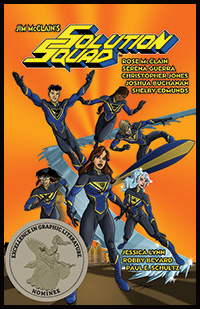
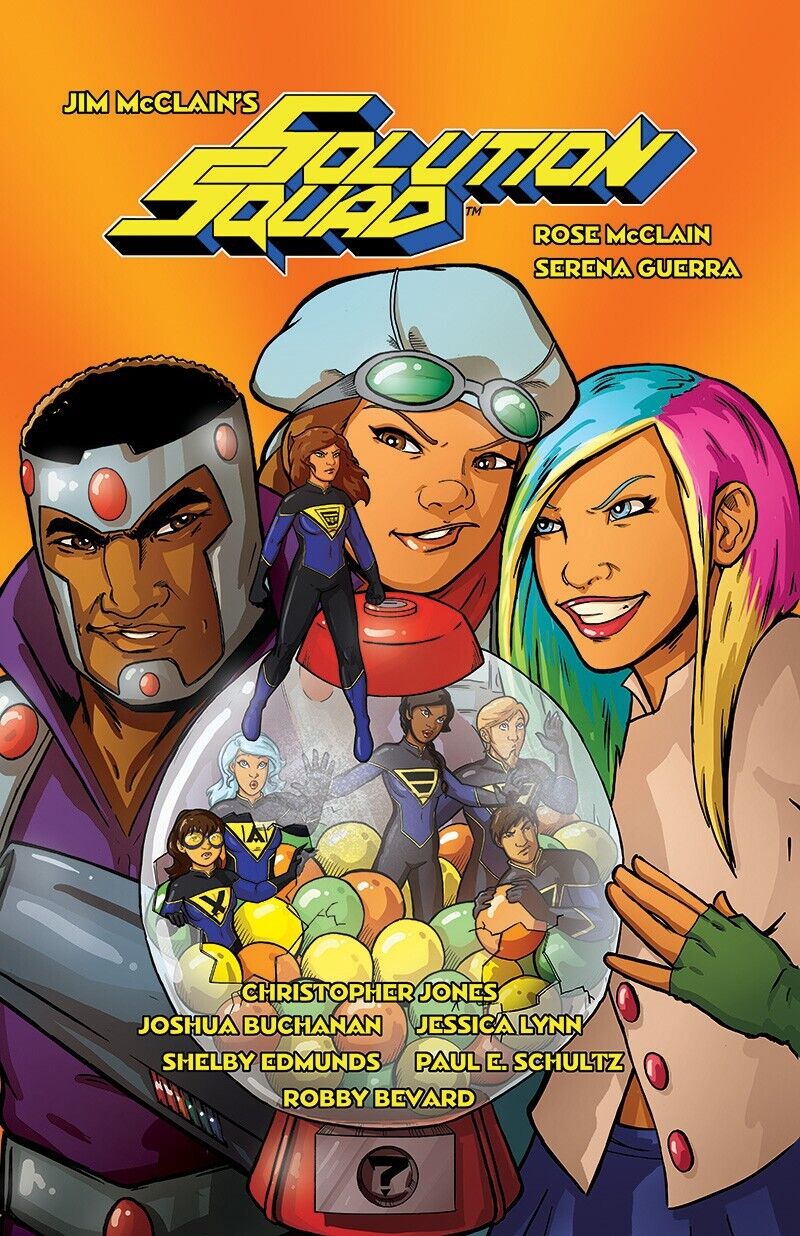
The only other Mego figure I ever got was the Shazam! (Captain Marvel) figure, which I got in 1978. I was 13, which you might think was too old to be playing with such toys. But this was an important time in my recovery from the years of abuse I wrote about here. My dad and my grandparents gave me the time to catch up on the imaginative play that I had missed, and I will be forever grateful to them for that. I had enjoyed the Shazam! TV show and remembered seeing a house ad for a battle between Superman and Captain Marvel. Since none of Superman’s powered villains were made by Mego, I wanted someone about as powerful for him to fight. In my Solution Squad story “The Case of the Eight-Inch Action Figures,” I wrote a scene where young Radical remembered that battle.
Radical remembers!
A few years back, I even had a Mego Radical figure customized. Talk about a thrill!
Package art by me!
Over the years, Mego has had the licenses for so many properties, it was like the predecessor of Funko, which makes its Pops for just about everything there is in pop culture land. And now that they’re back in business, they’re even releasing a line of 50th anniversary figures, which I’ll be sure to get. They’ll probably never leave their boxes, but I have vintage ones for that!
My 50-year-old vintage Superman in a custom diorama by Mike Sutter
One of the many, many reasons I re-retired from teaching was the new policy that my administration was trying to put forward. They didn’t like zeroes. During my interview, they asked me if I would cooperate with their new policy to not give zeroes for incomplete assignments, but to assign half the points even if they turned in nothing. I said sure, because I really didn’t care how grading was done. I was more interested in student learning.
But when it came time for me to get my students prepared to have a quarterly grade check in nine weeks, I told them that they really didn’t have all that much to worry about for the assignment portion of the grade, and here’s why:
Let’s say that I counted each completed assignment as four points, which I actually did. Four or four hundred, there’s no difference because it all scales. And let’s say that I gave five assignments for a grand total of 20 points. Once again, we’re just keeping things simple here. If they completed just one of the four assignments and got the full four points, they would pass. They looked at me like my head was on backward. I said, no, really, let’s take a look. If you get half credit for doing absolutely nothing, and just did the last of the five assignments, let’s see how that looks:
2 + 2 + 2 + 2 + 4 = 12
Congratulations, 12 out of 20 points is a 60% score, and that, according to the standardized school grading scale was a D-; a passing grade! You can look like you’re doing the work, even when you’re not.
Now, many people are going to try to argue with me here, and let me warn you. You will lose. It doesn’t matter what the assignments were worth. Make it 100 points per assignment.
50 + 50+ 50 + 50 + 100 = 300. And since the assignments are worth 100 points each, that’s 300 out of 500, or…60%. it’s the same. You do one assignment out of every five as well as you can and your homework grade will look like you tried. Now, mind you, if you actually want to pass, you’ll need to score higher than 60% on the assessments, but don’t worry about that, because we were encouraged to give multiple chances to take those.
We were being asked to lower our standards to such a point that almost nothing mattered, and that’s just a bitter pill to swallow when you’ve just come back from a year and a half of retirement.
When I was a child, from age seven to twelve, I suffered physical and emotional abuse at the hands of the man who would become my stepfather. I’ve talked and written about it elsewhere ad nauseam, but I think it’s appropriate to mention it here in this new venue. Unfortunately, the trauma I experienced is the central experience in my life. Every day, I deal with the effects.
It’s only fair to issue a trigger warning:
Trigger warning: Descriptions of abuse follow.
The abuse I experienced was both physical and emotional. I was beaten nearly every day on my bare behind with a wooden ruler with a metal backing. It was called “the stick.” At least, that’s what happened at first. I was eventually punched, kicked, and had my head held underwater so long that I had to literally fight for breath. The physical abuse escalated to the point where my mother thought he was going to kill me. The worst of the physical abuse came when I was eight, and he tore my infected fingernail off with a pair of pliers. This was ostensibly to avoid a doctor visit, which would have cost money. I ended up in the emergency room.
If you can quantify such things, the emotional abuse was worse. I was called worthless, stupid, lazy, and weak on a daily basis. But perhaps the worst thing that ever happened to me was when he burned all of my comic books in front of me. You’ve probably already read here what they meant to me. He claimed that they would give me nightmares, but the only thing that gave me nightmares was the burning of the comics.
The abuse finally ended on my 12th birthday, when my mother let me choose who to live with, my dad or her. That decision took 0.005 nanoseconds to make, and just after Christmas, I moved in with my dad, where I was safe. No one ever laid a hand on me again.
I bring all this up because, as the title of this post would imply, my abuse is the elephant in the room. Which room? Every room I’m in. As I said above, I struggle with the effects every day. Yes, I’ve had counseling. But as anyone who has ever experienced this to a certain degree will tell you, it doesn’t go away. It will never go away. The best you can do is learn how to carry it. And I think I have.
I don’t intend to write about this a lot, but almost everything I do write about will likely have at least one reference to it, so I didn’t want my readers to be in the dark.